Community Health Work: “What do I need to know?”

A few months ago, an executive coach I’ve known since the early months of the pandemic asked me a question about the community health work I have been doing for the past several years.

“Tell me five things about working in the community that you think I should know.”

I have thought about the question and the answers I spontaneously gave him since, confident that one thing is certain: I don’t really know completely. And I know that I won’t ever completely know. So in that spirit of true humility, when asked I focused on what I was learning, and I gave it a try.

It is worth noting that I spent the first thirty of the forty years of my professional career in the U.S. Military, where everyone had a job, a house, education and access to free health care. It is clear to me now that military members are under greater stress from health related social needs than I realized while I was in uniform. Regardless, in the transition a decade ago from this successful, single-payer, government health system, the biggest wakeup call I experienced was coming face to face with the lack of the same social supports for the patients I now cared for.

For the past decade, I worked in population health as the payer systems evolved to include models of “value-based care.” Over time, it became clear that the greatest value we could provide would be to work with community partners to assure economic growth and stability, housing, transportation and food access as well as health education and seamless health care access for our patients. The individuals of the urban community where my wife and I have lived, worked and worshiped have vastly different life experiences than we do. We continue to learn from them.

Since stepping away from a hospital population health role eighteen months ago, my role has largely been in community health. Thus, my coach’s request. This is what I told him.  

 “Nothing about us without us.”  This is the first lesson we all learn. It almost seems hackneyed except that we continue to pay less attention to it than we should. The phrase has Latin roots, “Nihil de nobis, sine nobis,” popularized in Europe as the standard for establishing foreign policy and legislation. It was made popular in the U.S. in the nineties by author James Charlton, who adopted the saying from South African disability activists. The idea has been applied to a range of community organizations and efforts working alongside historically marginalized individuals and groups.

The classic (unfortunately still common) example in university settings is a grant proposal designed by academics to study members of the community without any insight from the study population along with a request for endorsement from the academic department or center imagined to be working with “them” most closely. “They” should have been a part of the conversation from the beginning.

“Initiatives in communities of color should be led by leaders of color from the community.” It is more than just “optics.”  It is a matter of better visual acuity: being able to see more clearly. There are too many things that quite simply cannot be learned or taught. These are the things that are experienced, and they are the exclusive possession of those who have lived them. That is what these leaders bring to the table, and why they should ideally have the seat at the head. No one really likes someone else’s great idea. This is especially true when the great idea is about you.

“The work may not be professionally rewarding.” In an academic setting, every lecture or seminar contributes towards promotion for junior faculty. But where on the CV do we record Sunday afternoons spent at community sites reinforcing asthma inhaler technique with children and their parents, or teaching community health providers about measuring blood pressure correctly? In terms of community research, you really can’t just study, write and publish whatever you want from the work you are doing. It’s not your data. And it’s not your story. However, in my experience, what is lacking in professional reward is more than accounted for by work that is personally rewarding.

“If you are not uncomfortable, you are probably not crossing cultural boundaries.” People from different backgrounds approach problems differently. And that can make us uncomfortable. We respond to these differences in a range of different ways. One of the ways is our response to leadership. If you’re not at least a little uncomfortable, you may not be following the community leaders. We like being in charge, especially as physicians. And whether we know it or not, we can sometimes assume and subtly communicate that we could do the job better. Or even worse, our bias leads us to unconsciously assume that a leader from a marginalized population is intrinsically less qualified to run a project than we we are. I used to wonder at times why some of my community-based peers often need to present their credentials when they enter a new public setting. Perhaps it is because of the inherent tendency of people like me to at least act like we assume they have none.

“It is a near vertical learning curve with no plateau.” I am not a rock climber, but I suspect that you can’t climb a vertical without help. Or at least you shouldn’t try. But that means we must also do the work and the preparation to make the climb. As the poet Maya Angelo said, “Do the best you can until you know better. And when you know better, do better.” In this work, we are continually learning. And the greatest risk is the assumption that we finally “understand.”

Perhaps to put it more succinctly, for those of us from outside the community, working alongside community partners for the community’s health is a lifelong journey. It is a near vertical climb where you never really arrive. You do not want to make the climb without someone who knows the mountain.

And you don’t want to make the climb alone.

Chuck Callahan Henry V 4.3 – Lead from the Front   https://henryv43.com/

2 Comments

Filed under health care leadership, Uncategorized

The case for a cowboy.

For the last several years, I have been using Dr. Atul Gawande’s graduation speech to the Harvard Medical School Class of 2011 (“Cowboys and Pit Crews) in teaching about the evolution of health care delivery I have witnessed over my years in practice.

When my medical career began (during Reagan’s first presidential term), hierarchical “parallel mono-disciplinary” care was the typical patient’s experience, where a patient was passed between specialists and hospitals until someone (hopefully) took the time to sit down and listen to their journey, piece together the story, mine the available paper records and validate the patient’s concerns with a reasonable differential diagnostic and therapeutic plan. This pattern of care delivery continues in many settings today.

In the closing decades of the last century we moved forward considerably with multidisciplinary (multiple specialties looking at the same patient at the same time, often in the same clinical space) and interdisciplinary teams (multiple specialties looking at the same patient at the same time, including the voice of patient and family, and agreeing on a single patient and family-centered set of treatment goals).

More recently, we have increasingly recognized that health is more than the absence of disease. The true drivers of health are determined by the 8,759 hours a year our patients spend at home in their community rather than the roughly one hour a year the average American spends in a provider’s office. In the future, the individual and population’s health will be addressed by a new model of integrated, community-care teams that include health care professionals but also community navigators and service providers as equal partners who are able to address issues like housing, food security, employment and economics. (But that’s the subject for another post.)

Time has proven that Dr. Gawande was right. The future of health care depends on our ability to function like pit crew teams with broad, horizontal, flexible, situational leadership structures.

But for the past several weeks, I wish we had a cowboy.

Not long ago, a close family member was diagnosed with an aggressive, fatal condition. Unfortunately, we had to derive some of that diagnosis and prognosis from our own research, from combing through the on-line patient portal, using search engine AI and by reaching out to physicians through the “doctor-to-doctor” informal communication system.

The ambulatory provider who had cared for this family member for decades was not a part of the hospital team. The inpatient health care team members were attentive and empathetic. The leader of every team—nursing and physician—met with us. But no one seemed to be willing to address the bigger picture.

I know from my many years practicing pediatric intensive care that there is no joy in delivering terrible news. I recognized in myself long ago the subconscious tendency to avoid this unpleasant, uncomfortable task. I doubt I am alone. And so, we are all at risk to abrogate (“evade a responsibility or duty”) and thus abdicate (“fail to undertake a responsibility or duty”) when it comes to sharing bad news.

This can be compounded by aspects of team-thinking, including a tendency to defer to other specialties when higher-level conversations are needed. The trend towards “super-specialization” may contribute to the practice of leaving some of the tough conversations surrounding death and dying to the palliative or hospice care teams. But they should be invited into the treatment team after these difficult conversations have taken place and not before.

As strangers to the hospital and staff, what we needed was one person.

What we were missing was a cowboy.

We did not need the old-school bluster, swagger, arrogance or patriarchal condescension that occasionally characterized physicians of my era and before. For example, I was told that just before I started my first job in the seventies as a hospital technician in a coronary care unit, the nurses were expected to stand when the senior physician walked onto the unit. That’s not the kind of “cowboy” we were looking for.

We needed a consistent, straight-shooting clinical leader who helped prepare us as a family to make difficult decisions about our loved one’s treatment and outcomes; one voice to whom we knew we could turn over the weeks that this disease took its toll and perhaps even beyond, when the inevitable second guessing becomes an element of grieving. It could have been a person from any specialty. While the hospital inpatient physician and nursing teams justifiably rotated on a daily and weekly basis, we needed someone whom we saw every day, who checked on us and helped us understand the evolving clinical situations in the context of the bigger picture.

Hospitals are infinitely safer, more compassionate, and better organized than when my medical career began in the eighties. The evolution, promulgation and proliferation of healthcare teams has without question been a key driver of these improvements. We would no more go back to the stoic, isolated, aloof physician as sole decision maker than we would give up the electronic medical record to return to paper and pen.

Health care teams are the future of medicine, in clinical settings and in the community.

But sometimes, at specific points across the span of life, we still need consistent, visible leadership.

I think we still need cowboys.

Chuck Callahan Henry V 4.3 – Lead from the Front   https://henryv43.com/
7 Comments

Filed under health care leadership, Organizational Leadership

“Do you ever forget?”

My niece asked me this question recently.

We were talking about a small black “tattoo” she noticed on my left wrist; a cross with the letters “s” and “a.” I explained that they represented the Latin phrase “Sequor Agnum,” or “I follow the Lamb.” The image is a reminder to me of my daily efforts to follow the life and teachings of Jesus Christ who is depicted more often as a lamb in the New Testament Book of Revelation than any other apocryphal image.

It was the unusual circumstance of this mark that drew her question. I confessed that the “tattoo” was actually something I drew on my wrist with a Sharpee every morning as part of my imperfect efforts to center my focus and attention on what I hoped would be the organizing principle of my day. When she asked the question, I confessed to occasionally forgetting to draw it in the morning and explained that when I noticed it missing I would find another pen and complete the daily ritual. I did forget. But as I recalled the conversation, my casual explanation of the remedy for my forgetfulness obscured a deeper realization.

We all forget.

Continue reading

4 Comments

Filed under General Leadership

On being the Ted Lasso of anything

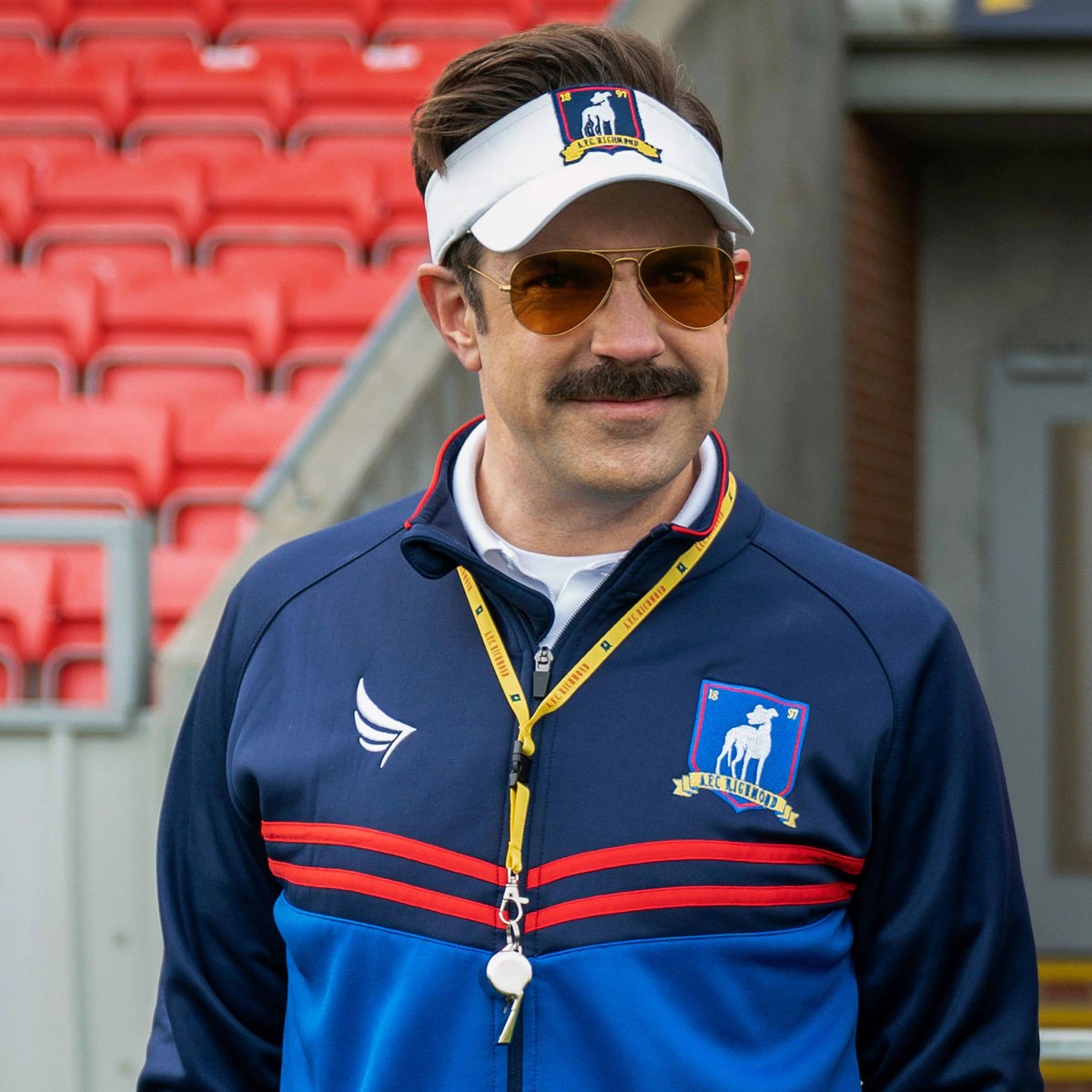
At a conference recently, several of my colleagues referred to me as “the Ted Lasso” of our institutional discipline. I was taken back at first as I wondered which features of this popular television character they thought I brought to mind (beyond perhaps my slightly too generous mustache). But the more I have thought about what I know was intended as a supreme compliment, the more I have come to embrace it. It is both honorable and at the same time aspirational.

Here I have to add something of a disclaimer. There was a pretty long time between when I watched the first Ted Lasso episode and when – following someone’s recommendation – I give the series another try. I thought the premise was another example of the ridiculous situations that characterize television sitcoms: an American football coach called upon to coach a British football (“soccer”) team with zero knowledge of the game who at the same time appears as the stereotypical caricature of a “good-old-boy” American. And frankly, there have been other moments watching that I have taken a pause on the series because some of the themes and language were a bit too much for my relatively conservative background. We eventually watched all three seasons and some episodes more than once. (The dart game may rank among my favorite of any television scene I have ever watched, S1E8.)

Still as I consider what Ted Lasso represents – especially through the filter of analyses like the Steve Cuss Podcasts and his approach to systems theory (Managing Leadership Anxiety: Yours and Theirs) – I embrace the metaphoric compliment and in specific have contemplated several aspects of the Ted Lasso character that I hope my colleagues intended in likening me to him. (These are grouped in an outline from Paul of Tarsus in a letter from prison to his “team” in Philippi). Continue reading

2 Comments

Filed under General Leadership, Personal Leadership

Perspective on a “speed limit” birthday

There are speed limit birthdays throughout life. They are times for us to take our foot off the gas, check the speedometer, maybe pump the brakes a little and make sure we’re still going the direction we intended. (We may also look around and make sure someone didn’t notice that we weren’t going too fast!)

This month I hit one of those speed limit birthdays. As I thought about this point on the journey, I found myself with a list of things I wish I could reach back and tell my younger self at similar, significant mile-per-hour moments. Here is a short list of some of what I wish I could say:

1973 – 15 years old.
High school -> college

  • Don’t be in such a hurry to get to medical school. Life is more than the next rung on the ladder. (It is going to take you most of your life to figure this out.)
  • You don’t need everyone to like you. Some just won’t. And it’s OK.
  • When your Dad tells you that he doesn’t care what you do as long as you’re the best at whatever it is, he doesn’t mean you have to be better than everyone else. He just means for you to be the best you can be. (It will take you most of your life to figure this out, too.)
  • You are going to take a lot of decades trying to lose the sense that you continually have to please your mother. She is already proud of you. You might as well get started on working that through.
  • And be nice to that cute girl you met in American History class. You are going to spend the rest of your life with her.

Continue reading

3 Comments

Filed under Personal Leadership

Bow Ties and Leader Orthopraxy

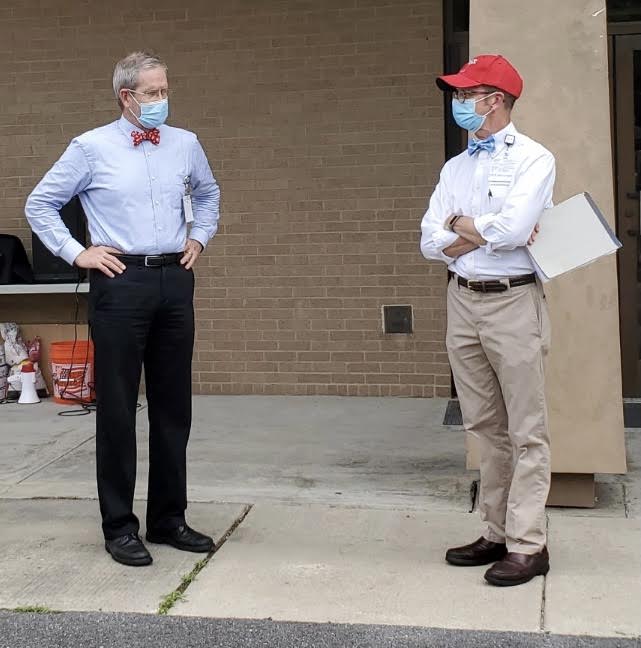
Early in our time as the Baltimore Convention Center Field Hospital (BCCFH) COVID Contingency hospital I started wearing a bow tie to work every day. My co-director Dr. Jim Ficke and I made the decision together and it became something of a trademark for us as we worked in the various testing, vaccination and treatment sites across Baltimore and Maryland. We joked with the staff that if anyone had a complaint, they should tell them to look for one of the guys with a bow tie. We got plenty of feedback from our patients. But it was largely compliments about our team rather than criticism. Several of the other executive leaders also wore bow ties as they came on board. They thought it was part of the uniform.

The tie is part of a larger set of lessons about professionalism that I have been learning throughout my health care career. A med school professor told me that he never wore blue jeans to the hospital because he didn’t want to create too casual an impression with patients. Since then, I haven’t either. I started wearing bow ties as a medical student when I decided on a career in pediatrics because I thought they were less likely to get urinated on than a neck tie. (The latter have been suspected of carrying pathologic bacteria. Though disputed, it’s another reason for a bow tie preference). Continue reading

Leave a comment

Filed under Organizational Leadership, Uncategorized

The Bat-Phone and Leader Presence

Recently I had the opportunity to speak to the mother of an infant hospitalized with respiratory illness in a hospital in another state. She was the daughter of a friend of a relative but it was a joy to speak to her, talk through some of her concerns and reassure her that from what she was telling me, she was in good hands. (Her baby did well!)

In the course of the conversation, I remembered that I knew a senior physician at the hospital and I send him a quick text. By the time I caught up with him a little while later, he had already been to the patient’s room. He missed the baby’s mother but left his card with his cell-phone number in case she needed anything.

His generous gesture reminded me of the “Bat-Phone” we instituted when I was a hospital CEO (Commander) a decade or so ago. I am relatively sure that I stole the idea from Quint Studer or another of the quality and patient experience gurus to whom we owe so much of the great things we were able to do at that facility while we were shaping a “Culture of Excellence.” We shared the Bat-Phone cell phone number with all of our staff, our hospitalized and ambulatory patients – probably thousands of people. I carried the phone with me every day. It was a visible symbol of our efforts to be accessible to our staff and patients. In addition to the phone number, we also had a link on our public and internal websites where people could reach out to the CEO by email directly. Continue reading

6 Comments

Filed under General Leadership, Personal Leadership, Uncategorized

Imperatives of Leadership: A Pandemic Response

“We few, we happy few, we band of brothers…”

The name of this website was inspired by an article on leadership based on two books by Sandhurst military historian John Keegan. The Face of Battle was his 1976 analysis of major battles in history including Agincourt (October 27, 1415). His 1987 book The Mask of Command highlighted styles of military leadership through history and concluded with five of what Keegan considered to be the “Imperatives of Leadership:” kinship, prescription, sanction, action, and example. The 1998 article examined Shakespeare’s speech by Henry at Agincourt (Henry V, Act 4, Scene 3) as an example of Keegan’s leadership imperatives.

In the early spring of 2020 as the COVID pandemic gained momentum, US Army Colonel (Retired) Dr. Jim Ficke and I were asked at the behest of the Governor to stand up a field hospital in the Baltimore Convention Center with a number of leaders from Johns Hopkins Medicine, the University of Maryland Medical Center and the Maryland Department of Health.

Fifteen months later the team concluded inpatient operations after providing care for 1,495 inpatients with COVID. Along the way (and often with short notice) we added missions including a mass COVID testing capability and later numerous community sites that have performed more than 110,000 tests to date. Monoclonal antibody infusions were added in the autumn of 2020 and more than 2,300 have been provided since. And finally, when vaccines became available,  a large-scale vaccination center was opened that has provided more than 122,000 vaccinations since February 2021. The Baltimore Convention Center Field Hospital (BCCFH) is almost certainly the longest continually operating convention center COVID hospital in the nation, and probably the only one where the same team also provided ambulatory infusion treatment, large scale COVID testing and vaccination.

In retrospect, Keegan’s imperatives of leadership were the standard as we established and operated the hospital. In many ways, they were key elements of its success. Continue reading

3 Comments

Filed under Organizational Leadership, Personal Leadership

“Of course!”


A PICU nurse said that to me recently. We had just finished doffing and were walking out of the hot zone transition area of the Convention Center COVID field hospital where we worked. We struck up a conversation and at the end of our exchange I thanked her for serving these patients with us. “Of course!” was her reply.

I think I have heard that response more often these days. Perhaps it is cultural or generational (millennial?). Or maybe it’s just a new colloquialism characteristic of the times. I can’t recall whether it was as common before COVID as it seems to be now. But maybe I should just blame that on “COVID time.” (It seems I can’t remember a lot of things from before COVID.)

In the case of this nurse the “Of course!” took on special meaning. We talked about our shared experience working in pediatric intensive care and the special calling it takes to be a nurse in that setting. She told me that she loved taking care of critically ill children, but when this contingency COVID hospital was established she wanted to be a part of it. The unit where she worked couldn’t allow her go to part-time, so she resigned. And she has been a part of caring for the more than 1,300 adults with COVID we have admitted in our past year or so of operation.

She left something she loved to be part of something she felt needed to be done.

In his mid-twentieth science fiction novel “Starship Troopers” (Putnam 1959), Robert Heinlein wrote “Duty is the social equivalent of self-interest.” It is “the basis of all morality.” It strikes me that duty was not something we heard as much about before the pandemic. Attention and devotion to duty seem to be common virtues now. Continue reading

Leave a comment

Filed under Uncategorized

“Is this your field hospital?”

“Is this your field hospital?”

This question is the reason I wear a tie to all our COVID testing events. I want people to know where they can direct complaints or concerns. I walked over to the gentleman who asked the question and steeled myself for “constructive feedback.”

It has been six months of almost exclusively COVID. Since mid-winter and my taking the role of Hospital Incident Command’s “Community Liaison,” the population health job has taken on a very specific focus as COVID has become the latest of the threats to the health for our community.

We started in early March by planning for hospital COVID testing and working with community health on food distribution after the schools closed and many of the children in the community lost access to several of their daily meals. By mid-month, a group of us from the two largest medical systems in our city met with the State Health Department and were directed to construct and operate a FEMA field hospital in the convention center. Continue reading

6 Comments

Filed under Organizational Leadership, Uncategorized